Funk is alive and well in almost every popular musical genre. Blues, rock, pop, jazz and even singer-songwriter players infuse their songs and performances with that distinctive funky feel, which originated in the 60’s largely thanks to the Godfather of Soul…Mr. James Brown.
As easy it might look and sound, funk is quite challenging and there’s nothing more uncomfortable to watch than a player attempting to get funky but failing miserably. Funk songs are mostly comprised of one or two chord vamps utilizing extended ‘bebop’ chords such as minor chords with added sevenths and elevenths, or dominant seventh chords with altered ninths.
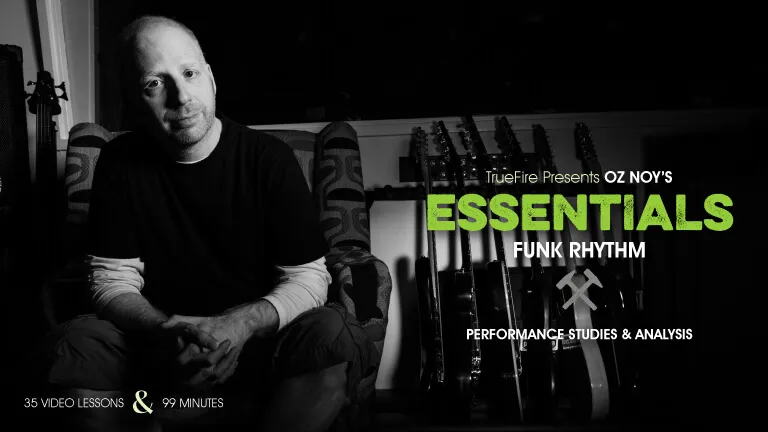
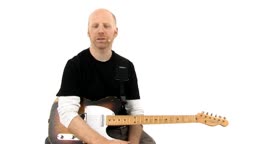
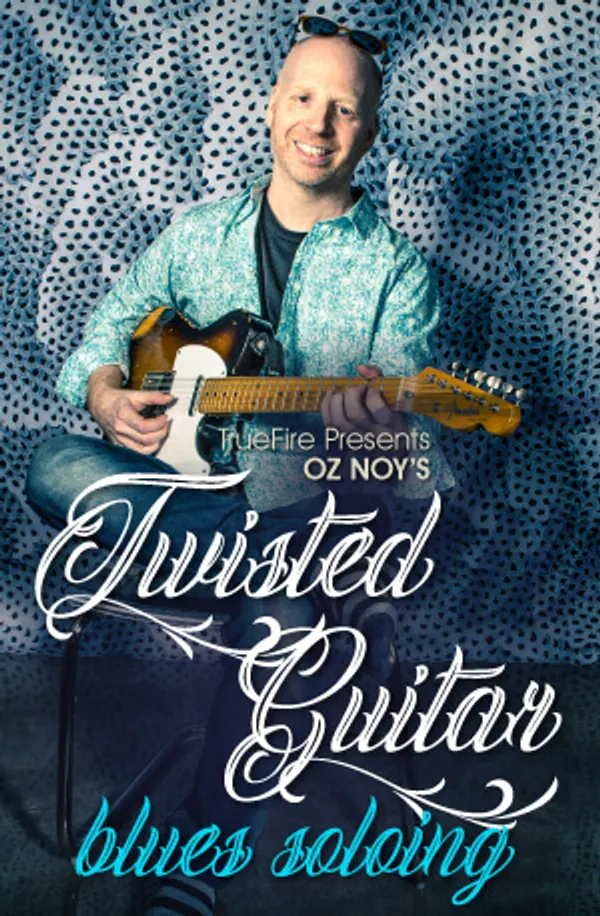
The challenge is nailing that funky rhythmic groove, locking up with the rhythm section, and maintaining that groove, often for extended periods of time. That’s why we asked Oz Noy to drill all of us in the art and science of funk. True to form, Oz made the magic happen again here this edition of Essentials : Funk Rhythm.
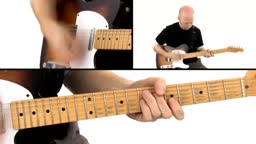
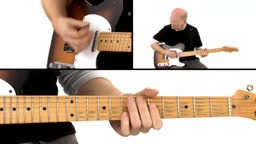
Oz has prepared 11 Performance Studies, each one inspired by a well-known funk song and groove. Many of the studies feature two guitar parts, which is also very typical of funk grooves. For each study, Oz will first perform it for you over a rhythm track, and then he’ll break down both guitar parts emphasizing the key concepts and techniques in play. Oz overviews each of the studies in the following narrative…
SHINING RHYTHM: “This study is inspired by the groove from Shining Star. The track is built around an E7 chord with two guitar parts, which was one of the things that made Earth, Wind, & Fire's style so unique. When playing these funk parts, it's important to find the "pocket" that you will be playing in and stay in it the best you can. This can be easily achieved by keeping your hand moving up and down through whatever right-hand pattern you are playing, just hitting the notes as "accents" of the rhythm. We'll look at how to use the Mixolydian scale to form the funk line at the end of the track and how to mute to get the sound of the second guitar part.”
SIMILAR BEAT: “Our next groove is based on the James Brown song Same Beat. Its in the key of C, using the famous C7/9 funk chord. This piece isn't very hard, but you have to play it over and over several times and so staying in the pocket can be a challenge. We take the chord up a half step to create the movement in the rhythm part, using muting to help keep time within the pocket. As we saw in the last track, there are two guitar parts playing at the same here, using muting and the Mixolydian scale in the second part to complement the rhythm section.”
NO MESSY CHORDS: “This next piece is based on James Brown's Papa Don't Take No Mess. This one is based around the G7/9 chord, and utilizes very small chords to get its sound. The main thing to grasp from this performance is to use small chords to make it sound crisp, using small intervals that keep the rhythm part sounding clean. For the right hand, remember to keep going up and down in the pocket, only playing within the melody and muting the rest of the time. For the second guitar part, I'm playing a single note part that is muted over a wah-wah effect, bouncing around the neck using the Gm pentatonic scale.”
HOT HANDS: “This next track is based on James Brown's Hot Pants Road. We'll be focusing on the left and right hand action working together to get the funk groove feeling. This is a fairly repetitive groove that can go on forever (if you want it to). Here we'll be using the Hendrix chord (the D7#9 chord), hitting the accents with the right hand. There's no other guitar part on this track, making the movement in the right hand more apparent. Make sure that you're syncing up the left and right hand perfectly to hit the accents across the left hand changes, muting the rest of the notes to keep track of the rhythm.”
CONTROL FREAK: “Control Freak is based on a song by Prince called Head. The groove is a straightforward funk rhythm in Am with two guitar parts. We'll go over how to get funky sounds by playing with the volume knob of the guitar. The background guitar part moves around the Am pentatonic in 4ths, filling in the holes between the drums, bass, and other guitar part. For the main part, we'll play around the hits of the first guitar part focusing on the rhythm of the song. Again, keep in the pocket with your right hand moving up and down.”
SUPER WAH: “This study is inspired by James Brown's Superbad. We'll be focusing on the wah wah action, which acts like a third hand by binding together the accents and muting. The second guitar part in this song is very important, keeping the groove together and setting a backdrop for the wah wah action. For the primary guitar part, accent on the one beat of the bar with the left hand, keeping the right hand moving up and down. The wah wah will add in a voice between the mutes and the accents, acting as a third hand. Experiment with the wah wah voice by adding fills and slides into the rhythm.”
BABY BE MINOR: “Baby Be Minor is inspired by Michael Jackson's Baby Be Mine. This song differs from the other funk tracks that we've looked at since it's in a minor key and has an R&B feel to it. We'll use some double stops and triads that can be worked into the rhythm of the song. I'll break down the chord pattern, focusing on how to keep the rhythm going and work our double stops and triads into it. The second guitar part in this track is a muted, typical R&B line that supports the other guitar's rhythm. Make sure to pay attention to it to draw out the most from the accents.”
SOUL INTERACTION: “Another study inspired by James Brown. We'll be in D7, with the only thing different being the second guitar part which plays repetitively through the entire piece. Try to play in the spaces that the other guitar is leaving to get a really funky groove going. The first part stays fairly static through the entire song, acting as an anchor to the other guitar. The second guitar part is the main groove, sliding from C#7 to D7 with some funk line fills that I'll break down for you in the video.”
MAJOR ONE ACTION: “This study features a unique funk groove inspired by James Brown's There It Is. There's some strong action on the one beat in this piece, using a major triad to build the funk rhythm instead of a D7 or C7 chord like we've been using. Try to work in some more rock inspired licks into this track. I've experimented around with the fills here, adding some Rolling Stones and Hendrix inspired lines into the rhythm, also using a phaser effect to make the accents pop. For the second guitar part we'll develop a line based on the D7, bringing in some blues pentatonic ideas to move it around.”
FUNK INJECTION: “Inspired by Tower of Power's Soul Vaccination, this may be the trickiest piece of the course, since the drums and the bass are very busy and don't leave very much room. We'll try to find the spaces in between, developing a part that keeps the groove going without getting in the way. We're in D7#9 for this track, mixing together three different parts: a funk rhythm section, a section using triads, and a muted funk line. Focus on transitioning between the sections while hitting the spaces that the other instruments leave open.”
UPTOWN MUTED GROOVES: “We'll be taking notes from Mark Ronson's Uptown Funk in this study. This groove shows off the relationship between the two guitar parts, allowing the muted funk guitar part to play around and improvise while the rhythm guitar part stays static. We'll switch roles here, keeping still with the rhythm part and improvising with the muted guitar. On rhythm, we'll hover around the Dm7 and D6 chords and keeping the groove together for the other part. Start simple with the muted funk line, giving the rhythm guitar some room to play, then play around with the Dm pentatonic scale as the groove develops.”
Oz demonstrates the rhythm parts over bass and drum tracks and then breaks them down by stepping you through the key concepts, techniques and creative approaches he used to craft the parts in the study. All of the key performances are tabbed and notated for your practice, reference and study purposes.
You’ll also get Guitar Pro files so that you can loop and/or slow any section down as you work through the lessons. Plus, Oz generously includes all of the rhythm tracks for you to work with on your own.
Grab your guitar and lets get funky with Oz Noy….
What you'll learn
Use chordal runs in funk contexts
Play clavinet-style muted rhythm parts
Create funk rhythm patterns with dynamic accents
Apply wah technique to octave playing and improvisation
Understand fundamental funk rhythm guitar concepts
Hi, I'm Oz Noy and welcome to Essentials: Funk Rhythm. Funk guitar is rooted in rhythm, packed with concepts like groove, playing in the pocket, and interacting with other musicians. In this edition of Essentials, we'll jump right in to the playing with 11 funk pieces in a variety of keys and feels.
We'll start with a fundamental rhythm incorporating funk chordal runs. Next, we'll cover a repetition based rhythm part, then I'll show you how smaller chords can really help emphasize a groove. We'll go over some right hand techniques and really start to drive our rhythms. Then, we'll work on a funky approach using 7/6 chords, work on a wah-wah inspired guitar groove, and look at voice leading. Incorporating rhythm guitar grooves with other instruments is another key approach, so we'll focus on how the guitar interacts with the drums and bass. Finally, we'll use muting to enhance a funky rhythm part.
I'll perform every piece and break it down for you, pointing out every technique you need to know. As always, you'll have the standard rhythm tracks and notation to work with as you go through the course. Grab your guitar and let's get started!
Our first groove is called "Shining Rhythm," inspired by the groove from "Shining Star." This track is built around an E7 chord with two guitar parts, which was one of the things that made Earth, Wind, & Fire's style unique.
Now I'll perform "Shining Rhythm" for you over a rhythm track. The rhythm track and chart are attached to this video so that after you've watched the performance you can work with them on your own. Next, we'll break down my approach to this piece section by section.
Now let me break this down. Again, this is a groove on the E7 chord. When playing these funk parts, it's important to find the "pocket" that you'll be playing in and stay in it the best you can. This can be easily achieved by keeping your hand moving up and down through whatever right hand pattern you're playing, just hitting the notes as "accents" of the rhythm. We'll look at how to use the Mixolydian scale to form the funk line at the end of the track and how to mute to get the sound of the second guitar part.
Our next groove is called "Similar Beat," based on the James Brown song "Same Beat." It’s in the key of C, using the famous C7/9 funk chord. This piece isn't very hard, but you'll have to play it over several times so staying in the pocket can be a challenge. Let's check it out!
Now I'll perform "Similar Beat" for you over a rhythm track. The rhythm track and chart are attached to this video so that after you've watched the performance you can work with them on your own. Next, we'll break down my approach to this piece section by section.
This groove uses the famous funk C7/9 chord, and is based on the James Brown song "Same Beat." We'll take the chord up a half step to create the movement in the rhythm part, using muting to help keep time within the pocket. As we saw in the last track, there are two guitar parts playing at the same here, using muting and the Mixolydian scale in the second part to complement the rhythm section.
This course already has me working to improve my funkiness. Yes, the basics are pretty easy at this point … but are they? There are nuances you have to pay attention to. Looking forward to finishing this course.
B
BC811393
Verified buyer
12/02/24
Bill
very concise and easy to understand
F
FrankHammer
Verified buyer
01/14/21
Funk Rhythm Guitar is a field every gitarist should work on. The skills you learn can be very useful in any other genre, because Funk Rhythm is the art of groove. Weather you play Rhythm to a bluessong, you hit your acoustic or you play Soul or Jazz, it´s all about the groove. Lately I was lucky to work with an excellent bass-player, and thats exactly what I learned from him. Oz Noy, the teacher, is a very cool player, and the examples he shows are very easy to understand. It can really spice up your playing, and anyway - most of the time we play Rhythm, not solo...
J
Jason123
Verified buyer
11/08/20
Oz Noy
Oz is very unique and has a great way of explaining things in simple terms that make sense.
5
5peter5000
Verified buyer
10/21/20
Essentials: Funk Rhythm Guitar
Oz is a fantastic guitarist who does inspire you and it's hard to put the guitar away during his lessons - how come that so many great jazz guitarists come from Israel?